What are your main responsibilities in your current role?
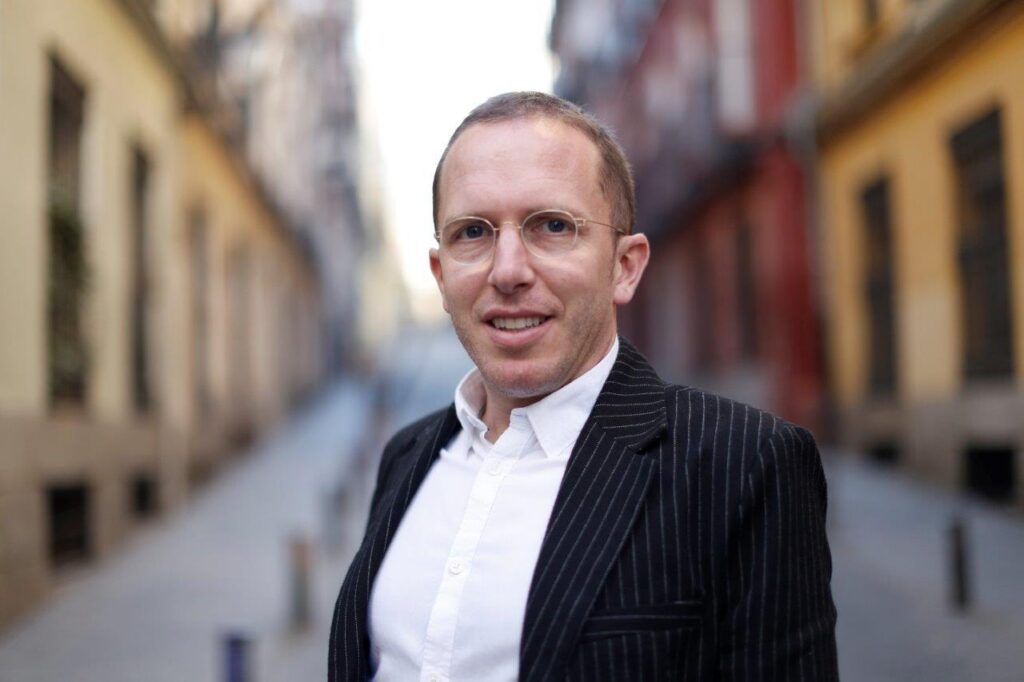
As area director, I am responsible for the planning and strategic development of La Fábrica’s projects related to literature, creativity, and thought, including the Festival Eñe, the Festival of Ideas, and the Fronteras: Literature and Music Festival. These projects operate based on a management model that connects a network of partnerships with entities and institutions to ensure their sustainability and development.
What has been your professional journey to where you are today, and what were the biggest challenges you faced?
After earning a degree in Art History from the University of Valladolid and completing postgraduate studies in Cultural Management at the Pontificia Universidad Católica del Perú—where I worked as a programming manager at the Centro Cultural de España in Lima—I continued my career as a cultural manager in Spain. One of the first challenges was bringing the knowledge and experience I gained in a Latin American context, where I worked in a publicly funded cultural center, and applying it within a private institution to large-scale projects whose viability relies on a public-private funding model.
How do you stay inspired and up to date in a constantly evolving field? What platforms do you use to stay informed?
For me, it is essential to maintain active observation not only of the cultural scene but also of politics, economics, society, and science. It is also important to participate in interprofessional gatherings that allow for the exchange of experiences. My main sources of information combine general and specialized media: national and international press, cultural magazines, and podcasts about culture and thought. I also use social media and closely follow the programming of festivals, museums, and cultural centers, which serve as excellent indicators of trends and contemporary debates.
What skills or qualities do you consider fundamental to your success in the cultural sector?
In my case, key qualities have been the ability to listen and a constant curiosity. Cultural management requires understanding creators, institutions, and audiences, which is only possible through empathy and dialogue. I would also highlight the ability to work as part of a team, since festivals and cultural programs are always the result of collective effort.
What advice would you give to someone starting their career in the cultural world?
First, I would say: cultivate curiosity and patience. The cultural sector does not always provide immediate results; it requires time, continuous learning, and strong observational skills. It is also essential to receive good training, although I believe that the real school is practical experience: making mistakes and trying again, and working in different roles to understand the machinery of cultural projects. Lastly, I consider it crucial to build networks. Culture is constructed collaboratively, and professional alliances are essential both for growth and for sustaining projects over time.